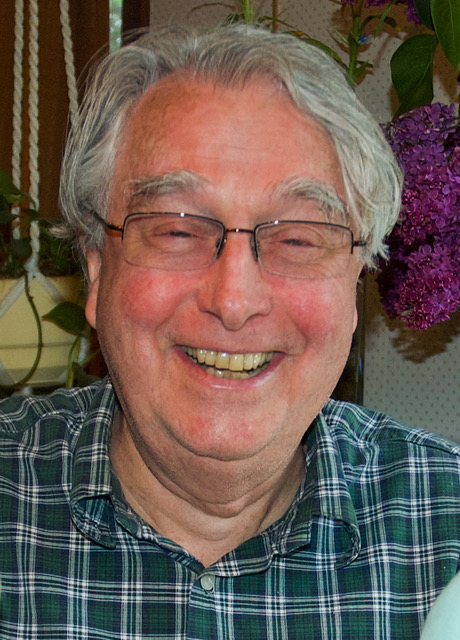
The international chiropractic community lost an advocate, administrator, teacher, colleague and dear friend with the passing of Dr. Glynn Till, a 1962 graduate of Lincoln College of Chiropractic (Indianapolis, 1926 to 1971) and a 1988 graduate of CMCC’s Clinical Sciences Graduate Program. He later served as Associate Dean of Undergraduate Education along with his spouse, Dr. Hettie Till. The two joined Dr. John Mrozek, Dean, in transitioning CMCC’s Doctor of Chiropractic program into an evidence-informed, outcome-based format.
Dr. Till served as an important advocate for the profession from his early days of practice. In 1971, roughly a decade after he graduated, the Chiropractors Act was passed in South Africa. The act provided for the licensing of only existing chiropractors and chiropractic students. Meeting with South Africa’s Ministry of Health in 1977, Dr. Till produced a rebuttal to the outstanding questions regarding the profession and in 1982, the Ministry passed the Allied Health Professions Act, an important step in the future licensure of chiropractic in the country.
Dr. Till and colleagues later travelled to North America and the UK and presented a report of findings to the Department of Health that eventually led to the development of chiropractic studies at Technicon Natal in Durban, now known as the Durban University of Technology. To ensure the program reflected international standards, Dr. Till moved to Toronto, Ontario to pursue graduate studies at CMCC. He returned to the program in South Africa and became the country’s first academic chiropractic department head. Some years later, he relocated to Canada for his role as associate dean at CMCC.
After his tenure at CMCC, Dr. Till moved to Scotland for a short retirement. He returned to South Africa in 2012, resumed practice, and volunteered as a consultant to the Senior Advisory Panel of the Chiropractic Association of South Africa.
As a member of CMCC faculty during a pivotal time, Dr. Till became close with a number of faculty and colleagues, some of whom have been kind enough to share their memories here:
Dr. Kim Ross, CMCC Director of Assessment, reflects on Dr. Till and his work:
I remember meeting Glynn in my third year as a CMCC faculty member as he was completing his residency program at CMCC.
When he returned in 2001 as Associate Dean of CMCC, as department Chair, I reported to him. He wanted to see an integrated curriculum at CMCC and the first step was to align topics in the courses so that the prerequisite basic science material was delivered immediately prior to the clinical application.
I remember a curricular planning meeting at a hotel at Mt. Pleasant and Eglinton in Toronto. Every course coordinator had written their course topics on index cards. The basic science crew loaded a giant table first, working together to arrange the cards so that similar things were being taught at the same time. Anatomy got the ball rolling because dissection was used in the course, and therefore the order of topics was not terribly flexible. Since the focus of chiropractic is spine, nothing could get off the ground (including technique) until the back was covered. Since the back delivers structures to the lower limbs, that became the next topic as students continued their journey through the human body. Then the semi-clinical application courses (like Biomechanics) placed all their cards on the table to align just slightly after the anatomical content delivery. This meant the students could easily follow the biomechanics of the joints because the anatomy had already been covered. Finally, the pure clinical courses placed their cards on the table (e.g., Diagnosis, Orthopaedics and Radiology). The cards were photographed, and these were used to generate the student schedule.
Later, the curriculum was broken down into topical modules. To be honest, even through all the changes to the curriculum since, the basic structure remains the same to this day.
The other benefit of this exercise was to ensure that the material delivered in basic science courses was relevant to a chiropractic practice. CMCC’s curriculum has always been voluminous, but from this moment, coordinators had to justify content by showing where it fit in the program. With a final outcome of patient assessment, diagnosis and treatment, it became clear which content would not be helpful in generating competencies required of a practicing chiropractor. I remember removing material from the course I was teaching because the material was relevant to a biomechanist, but would not help a student become a health care practitioner. Many years after Glynn left CMCC, the foundation just described led to the seven roles and key competencies that CMCC uses today.
What I remember most about Glynn's role at CMCC was his contribution to the degree granting status that CMCC enjoys today. Since Glynn had done similar work at Durban, he was the logical choice to get things off the ground at CMCC. I didn't work directly on this task, but whenever he needed curriculum data to support documentation, Glynn would tell me what he needed, and I would provide him the information with little idea of how it would help. When it was completed, I could see all the parts that I had passed over to him in the finished product.
As such, the DC designation following the name of a modern CMCC graduate represents a degree as opposed to a diploma. This was a critical step in generating future relationships with other academic institutions, also enjoyed by CMCC today.
Dr, Silvano Mior, CMCC Director, Research Partnerships
I was the coordinator of the Clinical Sciences Residency Program when Glynn was a resident. As a mature student, his clinical and life experiences enhanced our program. He was the consummate gentleman, always respectful imposing his amazing personal, professional and worldly experiences upon those around him. His gentle manner and soft, yet commanding, voice could settle a room and bring individuals into conversation, regardless how controversial the topic. And oh, did he enjoy debating such topics.
Glynn was passionate about the profession and his roots, but wise enough to appreciate the importance of changing with the times.
Despite the books about South Africa he sent me to entice me to visit him and Hettie in Durban, sadly I never did. I will miss regular emails from Glynn but am comforted with the fond memory of having known and shared laughs with him, and the privilege of his friendship. Missed but not forgotten.
Dr. John Mrozek – former CMCC Dean of Undergraduate Education
Glynn Till was a friend, leader and pioneer. His breadth of experience in chiropractic as practitioner, teacher and administrator was exemplary. He was in constant quest of greater knowledge and understanding of chiropractic, chiropractic education and healthcare.
I met Glynn when he was a CMCC resident, over 30 years ago. The residency formed part of his preparation for the development of a chiropractic program at Technicon Natal in Durban, South Africa. Years later, as Dean, I had the pleasure of working with him in his role as Associate Dean of Undergraduate Education at CMCC. I also had the pleasure of working closely with Glynn’s spouse, Hettie, also an Associate Dean of Undergraduate Education.
Glynn’s experience and knowledge had an impact on the rollout of our revised curriculum. His leadership style and experience contributed to making CMCC a leader in chiropractic education, a legacy that lives on.
Glynn shared many stories over the years. For example, he travelled to the Grand Canyon and decided to hike down in street shoes, resulting in ruined shoes and blisters.
We later traveled to Scotland and stayed with them in Dundee. Glynn took us to the old golf course at St. Andrews and we took a photo of the Swilcan Bridge on the 18th hole. Followers of golf will recognize this reference.
Glynn eventually returned home to South Africa and set up a small practice in the Franschhoek area near Cape Town, staying engaged in the profession as well as offering chiropractic care, his first love.
Several years after their return to South Africa, Glynn and Hettie visited with us in Houston, Texas, enroute to Puerto Rico to speak at a conference. While he was in Texas, he gave a well-received speech to our interns.
In 2018, we visited Hettie and Glynn in South Africa. For scenery and ambience, Franschhoek rivals Napa Valley. We enjoyed many memorable wine tastings together.
A bon vivant, Glynn loved cooking, fine dining, great wine and entertaining. If you needed information on growing roses, Glynn was your source. If you wanted to taste fabulous cuisine, Glynn could provide it. Especially Indian cuisine. He was also king of his Mongolian grill.
Glynn is survived his wife, Hettie and siblings on both sides of the family in South Africa. His contribution to chiropractic spans several continents and his influence lives on in the students he taught, the patients he treated, and the people he met. May he rest in peace.
Dr. Jeffrey Quon, Associate Professor at the School of Population and Public Health, UBC Faculty of Medicine
I first met Glynn in 1986, when we started our residency program together. At first glance, we had little in common - I was young, brash and naïve; he was mature, humble, and worldly. Who’d have thought we’d become such good friends?
During our first year of postgraduate work, we did almost everything together. We shared an office space, studied and planned our teaching activities, walked to and from CMCC (we only lived a kilometre away from each other), attended clinical rounds both on and off campus, and regularly had dinner —together.
Before long, we were practically joined at the hip, and even my girlfriend (and eventual wife), Pauline, didn't mind. She adored Glynn’s positive energy, his kindness, and his keen appreciation for good clean humour—and sarcasm. Pauline was a natural comedian, and Glynn was her biggest enabler. He would spend countless hours practicing a Yiddish accent while trying to replicate her signature style of humour. The accent kept eluding him, but he was persistent (one of his many traits), and so he continued to practice, much to our entertainment. Often, in the middle of dinner he would spontaneously get up from the table and put on his most serious face, all in advance of trying to tell a “Pauline” joke. In turn, Pauline and I would take in a collective deep breath, hold, then spill our wine while laughing uncontrollably—even before he’d uttered a word!
In his student days, Glynn had a tiny black and white TV in his apartment. After dinner, he would tune into comedy programs like the Golden Girls (he was a Betty White fan), and movies like the Pink Panther series (the Cato and Clouseau apartment ambush scenes would whip us, again, into fits of bellyaching laughter that would leave us literally gasping for air).
Glynn was a wonderful cook, foodie, and wine enthusiast. He loved to entertain. In Toronto, we would go back and forth hosting each other at our respective apartments, especially on weekends. During the mid-week, we’d dine out and “hang” at our favourite neighbourhood osteria (at Yonge and Erskine), sipping wine and waxing on about life and philosophy. Glynn was the consummate philosopher. Even 30 years later he would send me personal essays and notes on various topics, including Eastern religion, karma, reincarnation, and determinism.
Glynn and I completed our hospital-based residency rotations together in Saskatoon. As co-residents and roommates, we really became thick as thieves. We worked long hours, but played hard as well.
We bought bicycles and rode everywhere around town, year-round, even in sub-zero temperatures. During warm weather, we played tennis and, occasionally, golf, which everyone knew Glynn was very accomplished at. On a resident’s salary, our lifestyle was modest, but Glynn made sure we ate like kings. He cooked extravagant meals, often Indian and Middle Eastern cuisine. And he always knew how to pair a lovely bottle of wine with whatever was being served.
After our residency training, Glynn visited me in Vancouver almost immediately after graduation. By that time, Pauline and I had an apartment near the beach where, each day, we would swim, walk for ice cream and take in sunsets by the water. Glynn loved doing this routine with us. In the late evenings he would sit at our kitchen table, writing letters and postcards to friends abroad. My memory of him sitting quietly at a table, writing letters by hand, is so vivid.
I can’t remember what year he came to Vancouver with his beloved Hettie for the first time. It was memorable visit, most importantly because he was introducing me to someone whom he had talked poetically about since the year we had started our residency together. When I met Hettie, I instantly saw that she was his perfect match.
After many years of not seeing each other in person, I finally got around to visiting Glynn in South Africa. Had I waited a month longer, the booming pandemic would have denied me this reunion. When I was in Cape Town, Glynn and Hettie drove all the way from Franschhoek just to visit for the evening and attend a talk that Glynn himself had arranged for me to give to our South African colleagues. Then, a week later, I made the drive to see and stay with them. I had once read that that Franschhoek was the food and wine capital of South Africa. Glynn wholeheartedly agreed. He and Hettie had a beautiful life together there. They maintained a gorgeous home completely surrounded by lush vegetation and a garden that they meticulously maintained themselves. The food was always exquisite, and the hospitality and conversation even more so.
I wish I had been able to go back to South Africa to see Glynn just one more time. I would have stayed longer, and I would have enjoyed what would have been a daily and ongoing conversation with him about love, life, and friendship. To me, he was a scholar on so many subjects, but on these he was especially wise. Over the years, he also taught me about humility, kindness, and gratitude. I will not forget the lessons he taught me. I will always be grateful for his friendship.